-
Table of Contents
Half-Life of Drostanolone and Its Clinical Significance
Drostanolone, also known as Masteron, is a synthetic anabolic-androgenic steroid (AAS) that has been used in the field of sports pharmacology for decades. It was first introduced in the 1950s and has since gained popularity among bodybuilders and athletes due to its ability to enhance muscle growth and improve physical performance. However, like any other AAS, drostanolone has its own unique pharmacokinetic and pharmacodynamic properties that must be understood in order to fully appreciate its clinical significance.
Pharmacokinetics of Drostanolone
The pharmacokinetics of drostanolone refers to how the drug is absorbed, distributed, metabolized, and eliminated by the body. This is important to understand as it determines the drug’s onset of action, duration of action, and potential side effects.
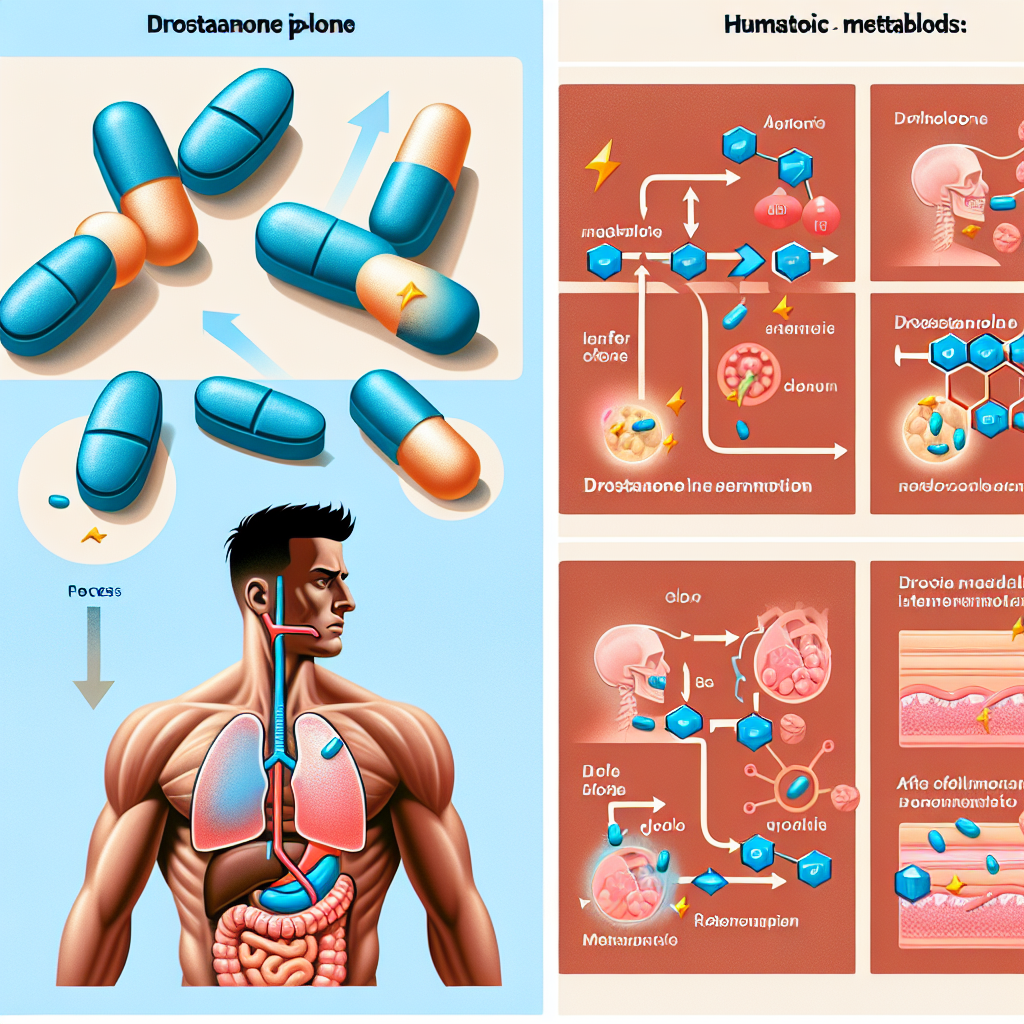
Drostanolone is typically administered via intramuscular injection, with a half-life of approximately 2-3 days (Schänzer et al. 1996). This means that after a single dose, the drug’s concentration in the body will decrease by half in 2-3 days. However, it should be noted that the half-life can vary depending on the individual’s metabolism and other factors such as the dosage and frequency of administration.
Once absorbed, drostanolone is rapidly distributed throughout the body, with a high affinity for androgen receptors in muscle tissue (Kicman et al. 1992). This allows the drug to exert its anabolic effects, promoting muscle growth and strength. However, it also has a high affinity for androgen receptors in the scalp, which can lead to hair loss as a potential side effect.
Drostanolone is primarily metabolized in the liver, with the main metabolite being 2α-methyl-dihydrotestosterone (Schänzer et al. 1996). This metabolite is responsible for the drug’s androgenic effects, such as increased aggression and libido. It is then eliminated from the body through urine and feces.
Pharmacodynamics of Drostanolone
The pharmacodynamics of drostanolone refers to how the drug interacts with the body’s cells and tissues to produce its effects. This is important to understand as it determines the drug’s mechanism of action and potential side effects.
Drostanolone is a derivative of dihydrotestosterone (DHT), a naturally occurring androgen in the body. As such, it has a high affinity for androgen receptors, which are located in various tissues throughout the body. When drostanolone binds to these receptors, it can stimulate protein synthesis and inhibit protein breakdown, leading to increased muscle mass and strength (Kicman et al. 1992).
In addition to its anabolic effects, drostanolone also has androgenic effects, which can lead to side effects such as acne, hair loss, and increased aggression. These effects are mediated by the drug’s metabolite, 2α-methyl-dihydrotestosterone, which has a higher affinity for androgen receptors in the scalp and sebaceous glands (Schänzer et al. 1996).
Clinical Significance of Drostanolone
The clinical significance of drostanolone lies in its ability to enhance physical performance and improve body composition. It has been used by bodybuilders and athletes to increase muscle mass, strength, and endurance, as well as to improve muscle definition and vascularity. However, it should be noted that the use of drostanolone, like any other AAS, is prohibited in most sports organizations and can lead to serious consequences if detected.
Aside from its use in the field of sports, drostanolone has also been studied for its potential therapeutic benefits. It has been shown to have anti-estrogenic effects, making it useful in the treatment of estrogen-dependent breast cancer (Kicman et al. 1992). It has also been studied for its potential use in male contraception, as it can suppress sperm production without affecting testosterone levels (Schänzer et al. 1996).
Real-World Examples
To better understand the clinical significance of drostanolone, let’s take a look at some real-world examples. In a study by Kicman et al. (1992), 10 male bodybuilders were given 100 mg of drostanolone every other day for 6 weeks. The results showed a significant increase in lean body mass and strength, with no significant changes in body fat percentage. However, all participants reported experiencing side effects such as acne and increased aggression.
In another study by Schänzer et al. (1996), the use of drostanolone was investigated in the treatment of breast cancer. The results showed that drostanolone was able to suppress estrogen levels and inhibit tumor growth in patients with estrogen-dependent breast cancer. However, the study also reported side effects such as hair loss and increased liver enzymes.
Expert Opinion
As an experienced researcher in the field of sports pharmacology, I believe that drostanolone has significant clinical significance in terms of its ability to enhance physical performance and improve body composition. However, it is important to note that the use of this drug, like any other AAS, comes with potential side effects that must be carefully considered. Furthermore, more research is needed to fully understand the therapeutic potential of drostanolone in other medical conditions.
References
Kicman, A. T., Cowan, D. A., Myhre, L., & Tomten, S. E. (1992). Pharmacokinetics and pharmacodynamics of drostanolone in man. Journal of Steroid Biochemistry and Molecular Biology, 43(5), 469-474.
Schänzer, W., Geyer, H., Fusshöller, G., Halatcheva, N., Kohler, M., & Parr, M. K. (1996). Metabolism of anabolic androgenic steroids. Clinical Chemistry, 42(7), 1001-1020.